
Global financial markets are in turmoil again: In-depth analysis of the monetary policies of the Federal Reserve and the Bank of England
- March 24, 2025
- Posted by: Macro Global Markets
- Category: News

In today’s complex and ever-changing global economic environment, the monetary policy decisions of central banks have become an important indicator of the financial market. Recently, the interest rate decisions and related policy dynamics of the Federal Reserve and the Bank of England have not only touched the nerves of investors, but also had a profound impact on the direction of the global financial market.
1.Federal Reserve: Maintain interest rates stable and slow the pace of balance sheet reduction
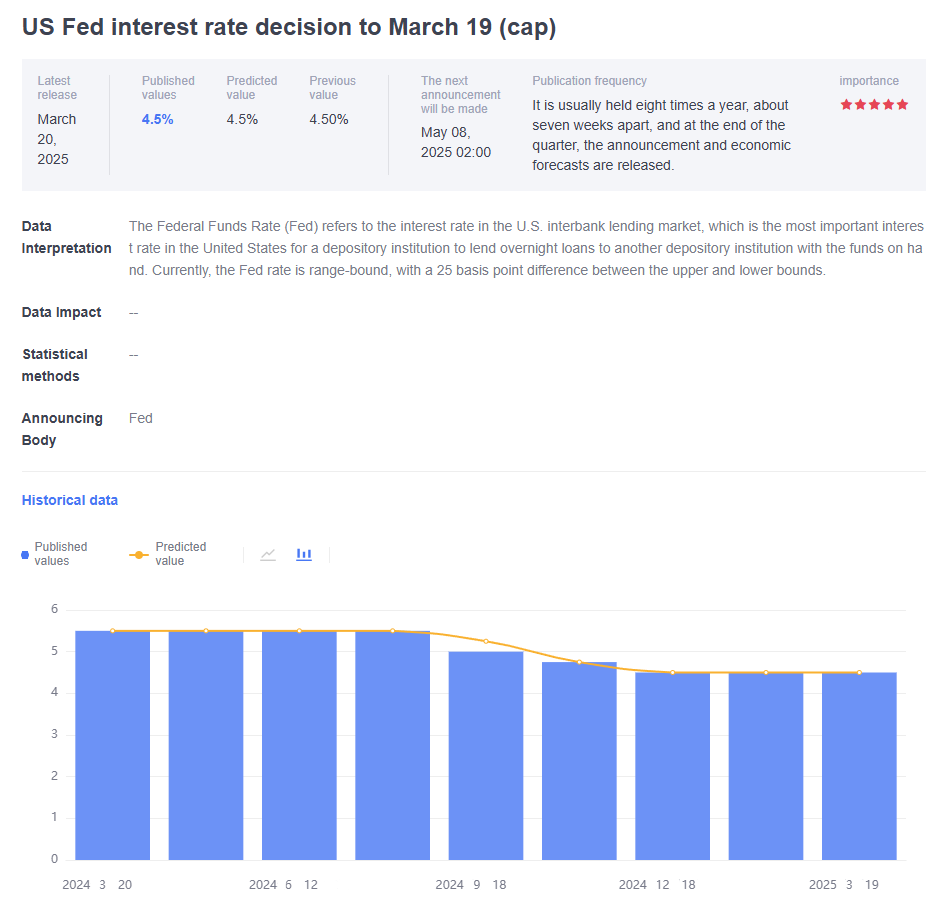
On March 20, 2025, the Federal Reserve announced that it would maintain the benchmark interest rate at 4.25%-4.50%. This decision is in line with market expectations and shows the Fed’s cautious and prudent attitude under the current economic situation. The Fed’s interest rate decision was made after a comprehensive assessment of a series of economic indicators. Recent data show that US economic activity is expanding at a steady pace, the unemployment rate is stable at a low level, and the labor market conditions remain strong. These factors provide strong support for maintaining stable interest rates. However, the inflation level is still high, which requires the Fed to remain highly vigilant in adjusting monetary policy.
It is worth noting that the Fed also revealed important information about its balance sheet reduction plan at this meeting. Since launching the balance sheet reduction in June 2022, the Fed has been steadily reducing its holdings of Treasury bonds, agency debt, and agency mortgage-backed securities. However, in view of the increasing uncertainty in the economic outlook, the Fed decided to slow down the pace of balance sheet reduction starting on April 1, reducing the monthly redemption limit of Treasury bonds from US$25 billion to US$5 billion, while the monthly redemption limit of agency bonds and agency mortgage-backed securities remained at US$35 billion. This adjustment is intended to balance risks and avoid adverse effects of excessive balance sheet reduction on financial markets and economic recovery.
The Fed’s policy adjustment not only affects the US domestic economy, but also triggers a chain reaction around the world. Capital flows, exchange rate fluctuations and global trade patterns in emerging market countries may change due to the Fed’s monetary policy direction. Investors need to pay close attention to further signals of the Fed’s future policies so as to adjust their investment strategies in a timely manner.
2.Bank of England: Interest rate decision is imminent, market expects cautious rate cut
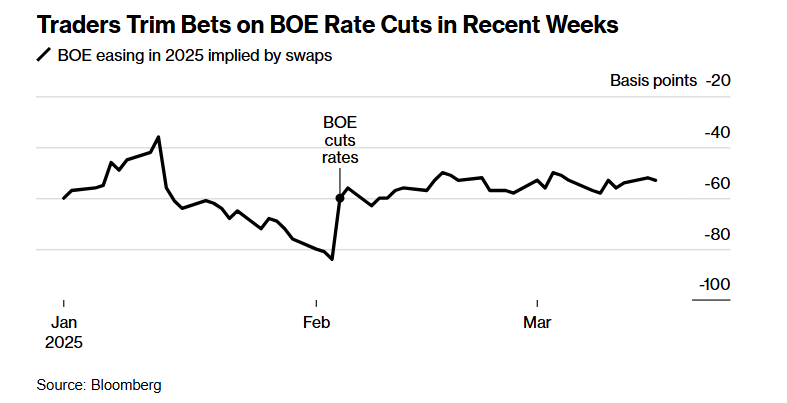
Almost at the same time as the Fed, the Bank of England will also announce its interest rate decision and meeting minutes at 20:00 Beijing time on Thursday. The market and economists generally expect that the Bank of England’s Monetary Policy Committee (MPC) will maintain the base rate at 4.5% and reiterate its cautious attitude towards further rate cuts. This expectation reflects the current complex economic situation in the UK.
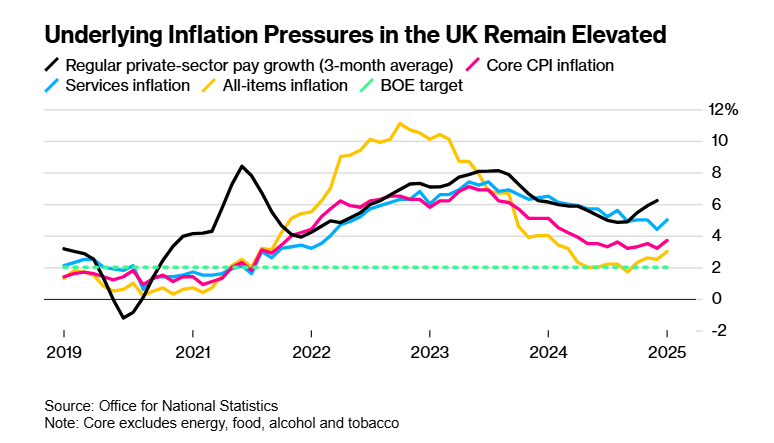
On the one hand, the British economy faces many challenges. Since 2024, the UK’s economic growth has slowed down, and the economy unexpectedly shrank by 0.1% in January. Although there was a strong growth of 0.4% in December last year, the overall growth outlook remains uncertain. At the same time, inflationary pressures still exist. The inflation rate in January was 3%, higher than the Bank of England’s previous expectations, and some economists predict that price increases will exceed 4% in the summer. This combination of high inflation and low growth has put the Bank of England in a dilemma when formulating monetary policy.
On the other hand, differences within the Bank of England on monetary policy are gradually emerging. At the February meeting, MPC member Catherine Mann unexpectedly changed from an extreme hawk to supporting a sharp interest rate cut of 50 basis points, which attracted widespread attention from the market. However, as economic data becomes clearer and the international situation changes, the market expects that the voting differences at this meeting will be narrowed, with seven members voting to maintain interest rates unchanged and the remaining two members supporting a 25 basis point interest rate cut. This distribution indicates that the Bank of England will be more cautious and gradual in adjusting its monetary policy.
The Bank of England’s interest rate decision not only affects the domestic economy, but also has an important impact on the global financial market. The pound exchange rate, UK government bond yields and international capital flows will all be closely watched. Investors need to flexibly adjust their investment layout in UK assets based on the Bank of England’s policy guidance and economic data.
3.Financial Market Outlook: Policy Divergence and Market Volatility
The monetary policy trends of the Federal Reserve and the Bank of England not only reflect the current situation and challenges of the domestic economies of the two countries, but also, to a certain extent, reflect the differentiation and uncertainty of the global financial market. In the context of globalization, the policy adjustments of central banks in various countries affect each other, forming a complex policy game pattern.
The Fed’s interest rate maintenance and slowing balance sheet reduction may lead to changes in global capital flows. Emerging market countries may see a certain degree of capital repatriation, but they should also be wary of market risks brought about by fluctuations in domestic economic data in the United States. The Bank of England’s cautious interest rate cut expectations reflect the coexistence of difficulties in Europe’s economic recovery and inflationary pressure. This policy divergence will intensify the volatility of global financial markets, and investors need to remain highly vigilant and do a good job of risk management.
In the future, as the global economic situation continues to evolve and central banks around the world continue to adjust their policies, the financial market will face more opportunities and challenges. Investors should pay close attention to macroeconomic data, central bank meeting minutes, and international political and economic trends in order to seize investment opportunities in a complex market environment and achieve steady asset appreciation.
In the ever-changing global financial market, the monetary policy decisions of the Federal Reserve and the Bank of England are undoubtedly the key indicators. Through in-depth interpretation and analysis of these policies, investors can better understand market dynamics, formulate more scientific and reasonable investment strategies, and move forward steadily on the road to wealth growth.




 English
  Chinese
  Vietnamese