
March 2025 US Non Farm payroll data analysis report: Gold trend under unexpected data
- April 8, 2025
- Posted by: Macro Global Markets
- Category: News

1、 Non farm Introduction/Non farm Summary
The non farm employment market in the United States in March showed characteristics of “total volume exceeding expectations and structural differentiation”, with employment resilience and slowing wage growth coexisting, providing complex signals for the Federal Reserve’s policy-making. Data shows that after the quarterly adjustment in March, the non farm employment population increased by 228000, far exceeding the market expectation of 135000, and the previous value was revised down from 151000 to 117000.
The unemployment rate rose slightly to 4.2%, and the labor force participation rate rebounded to 62.5%, mainly due to the increase in new labor force. By industry, the service industry has made significant contributions, with healthcare (+78000), leisure hotels (+43000), and retail (+24000) becoming the main driving factors, while employment in the production sector has generally declined. The federal government has reduced employment by 4000 people, following a decrease of 11000 jobs in February.
The employment situation in other major industries remained largely unchanged this month, including mining, quarrying, and oil and gas extraction; construction manufacturing Wholesale trade; Information industry; Financial activities; Professional and business services; Leisure and hotel industry; And other service industries. The salary growth rate slowed down to 3.8% year-on-year and 0.3% month on month, indicating a marginal easing of inflationary pressure.
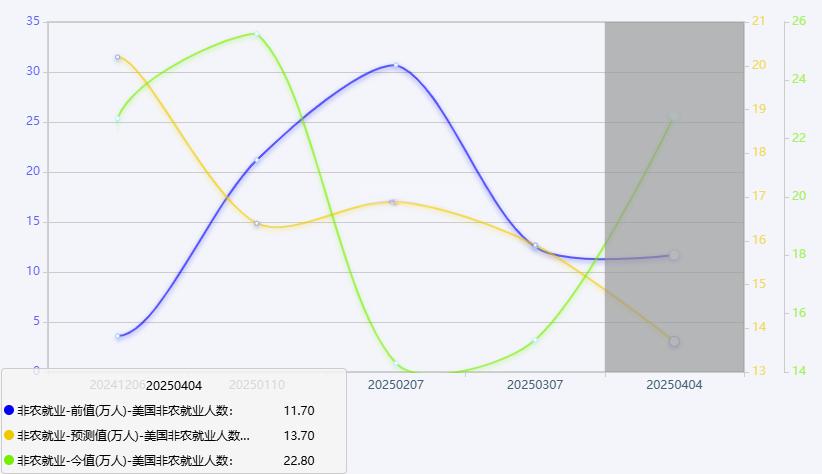
Key contradiction point: Although the total employment volume exceeded expectations, the previous value was significantly revised down (a total of 48000 in January and February), and the increase in labor participation rate led to a passive rise in unemployment rate. Coupled with the slowdown in wage growth, the market’s concerns about the “virtual strength and real weakness” of the job market have intensified.
2、 Interpretation of Small Non Agricultural ADP and Large Non Agricultural ADP
Small non farm payroll ADP: Private sector employment increased by 155000 in March, higher than the expected 105000, with the previous value revised up to 84000. By industry, the service industry (+132000) and manufacturing industry (+21000) have made significant contributions, indicating a rebound in private enterprise recruitment willingness. However, the growth rate of salaries has slowed down, with the increase in salary for those who stay on the job dropping to 4.6%, and the salary premium for those who switch jobs narrowing to 1.9%, reflecting the weakening of competition pressure in the labor market.
Big non farm data: 228000 new jobs added, reaching a new high since November 2024, and the unemployment rate of 4.2% is in line with Nomura Securities’ forecast. The recovery of government employment (+19000) and the resumption of strikes have driven the rebound of the retail and leisure accommodation industry, which is the core reason for the unexpected data.
The impact of non farm payroll on gold prices last month: After the release of non farm payroll data in February (with an increase of 117000 and an unemployment rate of 4.1%), market expectations for the Federal Reserve to cut interest rates cooled down, and the US dollar index rebounded to 102.37. Spot gold fell from a high of $3140 per ounce to $3096 per ounce.
However, the impact of tariff policies in March dominated the market, and the strong performance of non farm payroll data in March quickly shattered this pessimistic expectation. After the data was released, the US dollar index rose about 15 points in the short term to 101.9538, and then further climbed to 102.0950, indicating a brief rebound in market confidence in the US dollar. The price of gold is under significant pressure, with spot gold falling by $12 to $3088.13 per ounce at one point, and then slightly recovering to $3093.55 per ounce.
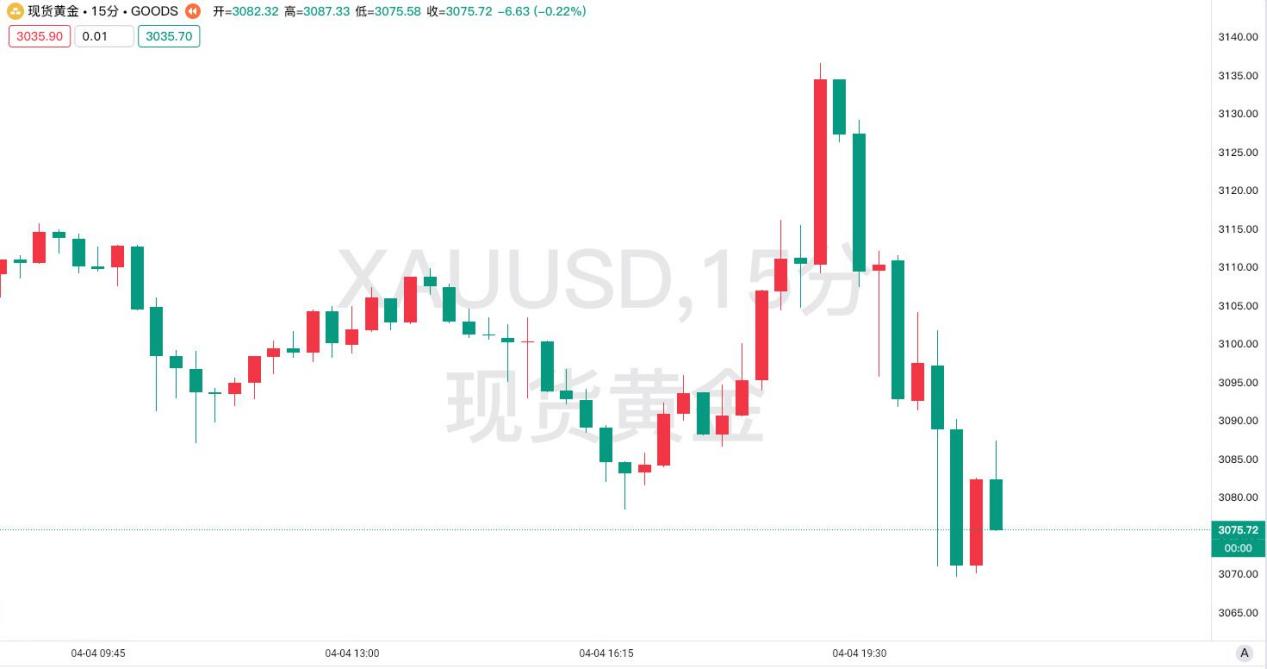
Note: This image shows the change in price increase within 3 hours after the release of non farm payroll
3、 Historical non farm payroll data chart
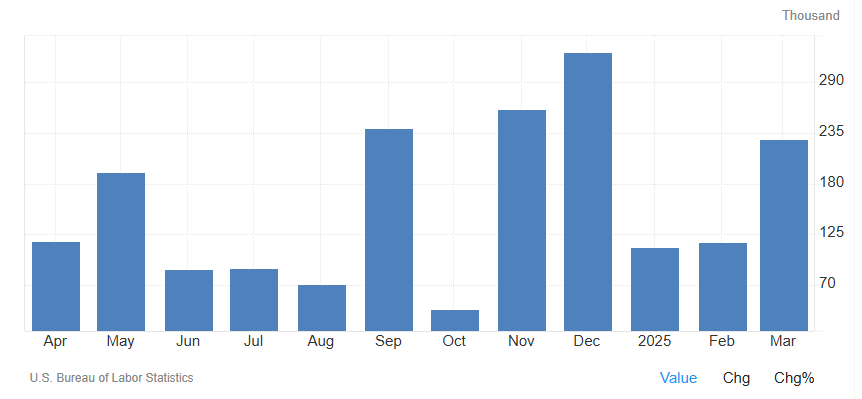
Trend analysis: The employment market in 2025 presents a pattern of “low at the beginning and high at the end”. The rebound in March data is mainly driven by seasonal factors (weather recovery, spring break) and the resumption of strikes, but the significant downward revision of the previous value weakens the credibility of the data.
4、 Related institutions or banks predict
Goldman Sachs predicts a non farm payroll increase of 135000 in March, but the actual result far exceeds expectations. It points out that the data reflects the “employment buffer period before the implementation of tariff policies”, but the subsequent impact of tariffs on the manufacturing industry may lead to a weakening of the job market.
CITIC Securities believes that the overall job market is healthy but marginally weak, and signals such as a decrease in the employment rate of the 25-54 age group and a slowdown in wage growth are worth being wary of. The Federal Reserve may maintain a hawkish stance due to inflationary pressures.
Citigroup: Emphasizing that data exceeded expectations or strengthened the Federal Reserve’s “higher for longer” policy path, but the economic uncertainty caused by tariffs may offset some of the hawkish impact.
Nomura Securities: It is expected that the unemployment rate will rise to 4.2%, consistent with actual data, and believes that the supply-demand relationship in the labor market is improving, but the increase in new labor may slow down the decline in unemployment rate.
5、 This small non farm ADP and large non farm transaction reminder
Data interpretation: The consistency between ADP and non farm payroll data (both exceeding expectations) strengthens the resilience of the job market, but a slowdown in wage growth may ease the pressure of the Federal Reserve’s interest rate hike. The market needs to be wary of the expectation gap of “strong data, weak policy”.
Gold trading strategy:
Technical aspect: The daily gold line has fallen below the 20 day moving average ($3054), indicating the establishment of a short-term bearish trend.
Fundamental: If non farm payroll data strengthens the hawkish stance of the Federal Reserve, a stronger US dollar may suppress gold prices; But if the risk of stagflation caused by tariffs increases, the safe haven nature of gold may support prices.
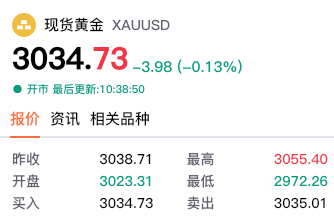
Risk Warning: As of the opening on April 7th at $3023.31 per ounce, gold spot prices fell to $2972.26 per ounce during the day, but then rose to $3034.73 per ounce. The volatility is significant, and investors need to control their positions and set stop losses.
6、 Non farm Weekly Other Important Market Information
Trump’s tariff policy takes effect: starting from April 5th, a 25% tariff will be imposed on imported cars. China has announced countermeasures against the United States, escalating global trade tensions and driving demand for gold as a safe haven; Federal Reserve Chairman Powell’s speech: On April 4th, he stated that “tariffs may push up inflation but more data is needed”, extinguishing market expectations of interest rate cuts, and the US dollar index rebounded to 102.37; US March CPI data: expected overall year-on-year growth of 2.5%, core year-on-year growth of 3.0%. If the data exceeds expectations, it may strengthen the hawkish stance of the Federal Reserve, otherwise it may alleviate market concerns about inflation; Geopolitical risks: the Russia-Ukraine conflict continues, the situation in the Middle East is turbulent, superimposed tariff policy shocks, market uncertainty intensifies, and gold becomes more attractive as a safe haven asset.
Comprehensive impact: The non farm market is facing a triple driving force of “data exceeding expectations+policy shocks+geopolitical risks” this week, and gold may continue to fluctuate widely. It is recommended that investors closely monitor the direction of breakthroughs in the 3000-3094 US dollar range.
Summarize
The non farm payroll data for March shows that the US job market remains resilient, but the previous value has been revised downwards, wage growth has slowed down, and the impact of tariff policies has weakened the value of the data. The balance between inflation and growth by the Federal Reserve is more complex, and the market needs to be wary of the rising risk of “stagflation”. Gold is suppressed by technical factors in the short term, but still has the potential to rise in the medium to long term supported by geopolitical and policy uncertainty. Investors should combine data and event driven strategies to flexibly adjust their trading strategies.





 English
  Chinese
  Vietnamese