
The car tariff storm is escalating! Trump’s Michigan ‘backyard fire’
- April 11, 2025
- Posted by: Macro Global Markets
- Category: News
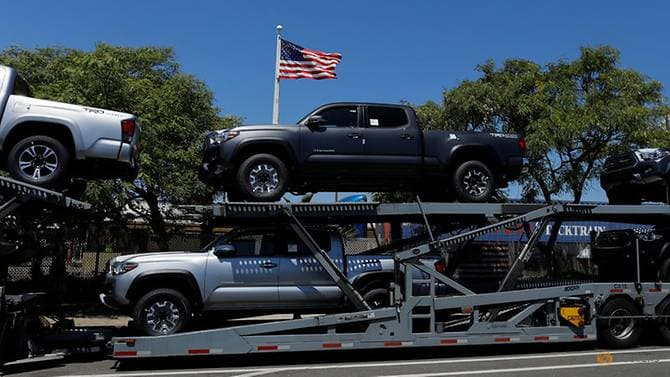
The US policy of imposing a 25% tariff on imported cars and parts, which came into effect on April 3, has caused a severe shock in the global trade landscape. As the core of the American automotive industry, Michigan’s political backlash continues to ferment.
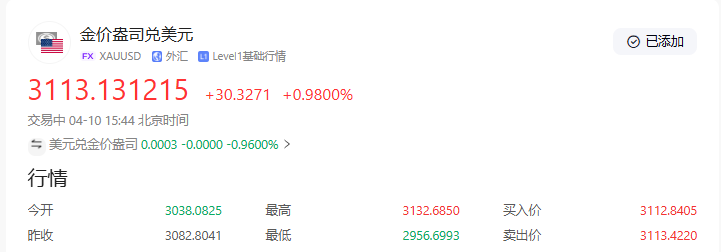
On April 10th local time, the Detroit Regional Chamber of Commerce and Michigan Auto jointly issued an emergency statement warning that the Trump administration’s tariff policies would put one-fifth of the state’s jobs (about 280000 people) at risk, and the annual output value of the automotive industry could shrink by $300 billion. At the same time, major trading partners such as China, the European Union, and Canada have simultaneously launched countermeasures, causing the global trade friction index to soar to historical highs. The demand for gold as a safe haven asset has surged, and spot gold prices have broken through the $3100/ounce mark, reaching a new high since 2025.
1、 The ‘nuclear bomb’ of automobile tariffs triggers a global industrial chain crisis
Policy implementation and industry impact
The Trump administration’s tariffs this time cover far beyond expectations, including 150 core component categories such as engines, transmissions, and lithium batteries, involving an annual trade volume of nearly $600 billion.
AlixPartners estimates that the cost of each American made car will increase by $4000, with an annual cost increase of $40 billion. The cost of 56% of car models sold by companies such as Hyundai in the United States will increase by $5000-7500. The irreversibility of supply chain restructuring exacerbates the crisis: Ford’s relocation back to the production line would cost billions of dollars and take several years, while Hyundai’s $21 billion US investment plan cannot alleviate export pressure in the short term.
The Political Economy of Michigan’s’ Backfire ‘
Michigan, as the “heart of the automotive industry,” heavily relies on cross-border supply chains for its economic structure. 80% of the components from over 1000 car suppliers in the state come from China, and the cost increase caused by tariffs has forced companies to launch “local substitution” plans, but it is difficult to achieve in the short term.
Stellantis Group announced on April 5th that it would suspend operations at its factories in Mexico and Canada and lay off 900 employees, becoming the first American automaker to lay off employees due to tariffs. Michigan University economist Gabriel Ehrlich predicts that steel and aluminum tariffs alone will result in the loss of 600 automotive manufacturing jobs in the state, and combined with the impact of vehicle tariffs, the actual number of unemployed people may double.
2、 Trump’s’ Rust Belt ‘political foundation shakes
The rift within the Republican Party is widening
The opposition voices of Republican lawmakers and business groups in Michigan have formed a ‘political earthquake’. The Detroit Regional Chamber of Commerce stated in a statement that the tariff policy will “cause disproportionate pain to working-class and middle-class families” and called on the Trump administration to immediately halt the program. Seven Republican senators jointly proposed the “2025 Trade Review Act” on April 8th, calling for limiting the president’s unilateral power to impose tariffs, but Trump threatened to veto the bill.

Public opinion and election risks
Michigan, as a “swing state” for the 2024 election, has seen a loosening of Trump’s approval rating. On April 9th, an Ipsos poll showed that only 37% of voters in the state approved of Trump’s economic policies, a decrease of 12 percentage points from November 2024. Local Democratic Governor Gavin Newson publicly criticized the tariff policy as “taxing hardworking American families” and emphasized that China is Michigan’s largest trading partner.
3、 The gold market: the “two-way drive” of hedging demand and policy game
Price and Capital Flow
On April 10th, in the Asian session, spot gold broke through $3100 per ounce, with a intraday increase of 1.33%. COMEX gold futures holdings increased by 18000 lots, marking the largest daily increase since 2022. Gold ETFs saw a net inflow of $1.2 billion in a single day, indicating an accelerated influx of funds into safe haven assets.
Policy milestones
On April 10th, the US March CPI data: If it exceeds expectations (market expectation of 4.8%), it may trigger hawkish expectations of interest rate hikes by the Federal Reserve, leading to a pullback in gold prices to $3050; If it falls below 4.5%, the expectation of interest rate cuts may heat up or push gold prices above $3150.
On May 3rd, tariffs on parts will come into effect: core components such as engines and transmissions will be included in the scope of taxation, and the cost pressure on car companies will be further transmitted to the consumer end.
The trade war and political backlash triggered by automobile tariffs are reshaping the global economic landscape. The ‘backlash’ in Michigan not only exposed the internal contradictions of Trump’s policies, but also highlighted the fragility of the global industrial chain. Investors need to distinguish between “panic chasing” and “systematic allocation” in short-term fluctuations, strictly control their positions, and implement stop loss strategies to cope with possible liquidity shocks and unexpected data risks.



 English
  Chinese
  Vietnamese