
The Democratic Party warns Trump that ‘speculating on Powell is like a stock market crash’! Gold surges against the trend, causing 90% of Wall Street funds to suffer losses
- April 21, 2025
- Posted by: Macro Global Markets
- Category: News
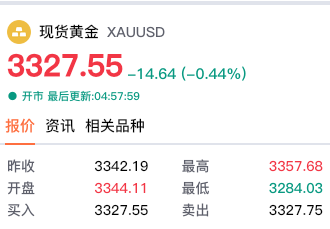
The game of control over the Federal Reserve between the Democratic Party and the White House has heated up: Senate Democratic leader Chuck Schumer publicly warned on April 18 that if Trump forcibly fired Powell, the US stock market may repeat the mistakes of Black Monday in 1987. At the same time, the gold market remained unscathed in the policy storm, with spot gold hitting a historic high of $3357.74 per ounce and then falling back to around $3327 per ounce, while Wall Street hedge funds suffered epic losses – according to Bloomberg statistics, 90% of top tier funds lost over 15% within the year, Citadel、 The weekly drawdown of giants such as Renaissance Technology reached 8% -12%. The core of this “political market” dual storm is the economic “stagflation trap” triggered by Trump’s tariff policy and the approaching critical point of the Federal Reserve’s policy shift.
1、 Political Game Escalation: The ‘Federal Reserve War’ between the Democratic Party and the White House
1. Schumer’s’ Stock Crash Warning ‘
On April 18th, Chuck Schumer delivered an emergency speech in the Senate, strongly criticizing Trump’s “political intervention” in the Federal Reserve: “If the president tries to bypass legal procedures to dismiss Powell, it will be a ‘suicide attack’ on the US financial system. During the 1987 stock market crash, the Federal Reserve stabilized the market by decisively cutting interest rates, but the current policy environment is more fragile than then.” Schumer quoted former Federal Reserve Chairman Greenspan’s view that if the independence of the Federal Reserve is compromised, the S&P 500 index could plummet by more than 20% in a single day.
2. Trump’s “palace forcing” operation
On April 17th, Trump once again criticized Powell on social media for being “slow to act” and hinted at the possibility of early dismissal: “The earlier Powell leaves, the better. His policies are suffocating American businesses.” This statement echoes the recent intensive contacts with dovish figures such as former Federal Reserve Governor Walsh by the White House. Although Powell emphasized that “the law does not allow the president to dismiss the Federal Reserve chairman,” the market has begun to price the risk of “Powell’s unexpected resignation” – interest rate futures show that if Trump forces a change, the probability of a June rate cut could soar from the current 60% to 85%.
3. The “ghost reappearance” of the 1987 stock market crash
Economist Peter Schiff warns that the current volatility in the US Treasury market has shown signs of a precursor to the 1987 crisis: the 10-year Treasury yield has exceeded 4.5%, the 30-year yield has hit 5%, and if the Federal Reserve does not urgently initiate “rate cuts+QE”, the stock market may collapse by 20% in a single day. It is worth noting that in 1987, the Federal Reserve rescued the market through “unlimited liquidity injection”, but current inflationary pressures (core PCE in March was 2.9% year-on-year) make it difficult for Powell to replicate this strategy.
2、 Gold reigns supreme in turbulent times: fund losses resonate with safe haven demand
1. Hedge funds are completely wiped out
Top Wall Street institutions have encountered Waterloo in this storm:
Renaissance Technology: Flagship fund lost 8% in April, with its annual return rate halved from 11.3% to 4.4%.
Citadel: The multi strategy fund experienced a 12% weekly drawdown, marking the largest decline since May 2021.
Bridgewater Fund: Despite the flagship product PureAlphaII rising 11.3% this year, the macro hedging department suffered a 5% loss due to misjudging the trend of US bonds.
Bloomberg data shows that 90% of the top 50 hedge funds worldwide failed to outperform gold – spot gold rose 27.8% this year, while the S&P 500 index fell 7% during the same period.
2. The “driving logic” of gold
Stagflation trading: Tariffs push up import commodity prices, with core PCE rising to 2.9% year-on-year in March, while consumer confidence index plummets to its lowest level since 2011, and real interest rates remain negative, strengthening the attractiveness of gold.
Geopolitical hedging: The deadlock in Russia Ukraine negotiations and the increasing uncertainty of Trump’s tariff policies have driven a net inflow of 53.64 million yuan in gold ETF funds, and the People’s Bank of China has increased its holdings of gold to 2200 tons for 12 consecutive months.
3、 Policy Turning Critical Point: The ‘Century Game’ of Tariffs and Interest Rates
1. The ‘economic toxicity’ of tariff shocks
The Trump administration announced on April 18th that it would impose tariffs on drugs, covering 80% of imported active pharmaceutical ingredients in the United States, directly impacting the healthcare supply chain. The Peterson Institute for International Economics estimates that aggressive tariff policies will reduce US GDP growth by 1.05% in 2025, and the unemployment rate may rise from 3.6% to 5.2%. What’s even more severe is that tariffs have pushed up household spending by an average of $5000 per year, forming a “death spiral” with deteriorating consumer confidence.
2. The Federal Reserve’s “Dilemma”
Powell stated on April 16th that he is “not considering a rate cut for now,” but the market is betting on a 60% probability of a rate cut in June. According to calculations by China Merchants Securities, if the impact of tariffs continues, the Federal Reserve may cumulatively cut interest rates by 100 basis points by 2025. This expectation has driven the US bond yield curve to steepen, and the 10-year treasury bond bond yield has fallen below 3.95%, providing gold with “zero interest rate environment” support.
3. The “survival crisis” between enterprises and capital
Automotive industry: German Audi suspends delivery of new cars to the United States, Michigan auto workers face a tenfold wage gap.
Pharmaceutical industry: Eli Lilly and Novo Nordisk reduce R&D investment, Indian raw material companies face a 10-year production capacity transfer cycle.
Capital flow: In April, fund managers reduced their net allocation of US stocks by 36%, hitting a new low since May 2023, as funds accelerated into gold, utilities, and essential category stocks.
The US economy is standing on the edge of a ‘policy cliff’, with the ‘Federal Reserve War’ between the Democratic Party and the White House, the ‘bust wave’ of hedge funds, and the ‘safe haven frenzy’ of gold collectively forming the most complex market landscape of 2025. For investors, gold is not only a “crisis insurance” against stagflation and geopolitical risks, but also a “historical witness” to the reconstruction of the global economic order. It is recommended to closely monitor the minutes of the Federal Reserve meeting on April 22 and the progress of the Russia Ukraine negotiations, as these factors may serve as catalysts for gold prices to break through the range.




 English
  Chinese
  Vietnamese