
The US Russia energy ceasefire agreement has finally been implemented, with gold fluctuating at a high level and waiting for direction
- March 20, 2025
- Posted by: Macro Global Markets
- Category: News
1、 Limited ceasefire reached in US Russia phone call, comprehensive peace still uncertain
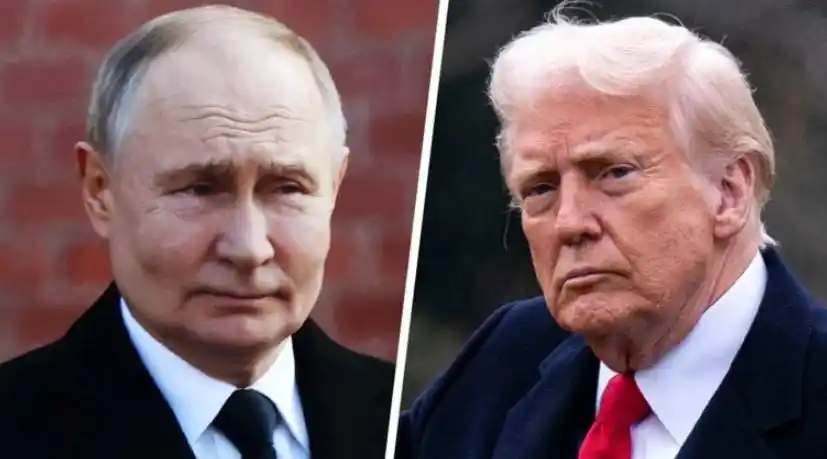
On March 18th local time, US President Trump and Russian President Putin had a phone call and reached a key consensus on the situation in Ukraine: both sides agreed to suspend attacks on each other’s energy infrastructure for 30 days to promote subsequent peace negotiations. According to the White House statement, the agreement will take immediate effect, but the Kremlin emphasized that the ceasefire must be conditional on Ukraine ceasing to receive foreign military aid and abandoning its membership in NATO, and that Russia reserves the right to retaliate against actions that “threaten Russia’s territorial security”.
The Russian side stated that if the Ukrainian army surrenders, they will be treated humanely. Regarding Trump’s recent call to “preserve the lives of Ukrainian soldiers besieged in Kursk Oblast,” Putin stated that Russia is willing to uphold humanitarian principles and promises to guarantee their right to life and provide humane treatment in accordance with Russian and international legal norms if Ukrainian troops surrender.
The achievement of this limited ceasefire agreement stems from the United States’ concerns about the continued attacks on Ukraine’s energy facilities. Data shows that since 2025, 60% of the power system in Ukraine has been paralyzed due to Russian military strikes. However, the analysis points out that the core differences between the two sides have not yet been resolved: Ukraine insists on territorial integrity, while Russia demands recognition of sovereignty over Crimea and the four eastern Ukrainian regions. German Chancellor Scholz bluntly stated, “The energy ceasefire is a positive signal, but a comprehensive ceasefire requires more political compromises
2、 Risk aversion sentiment cools, gold price under pressure
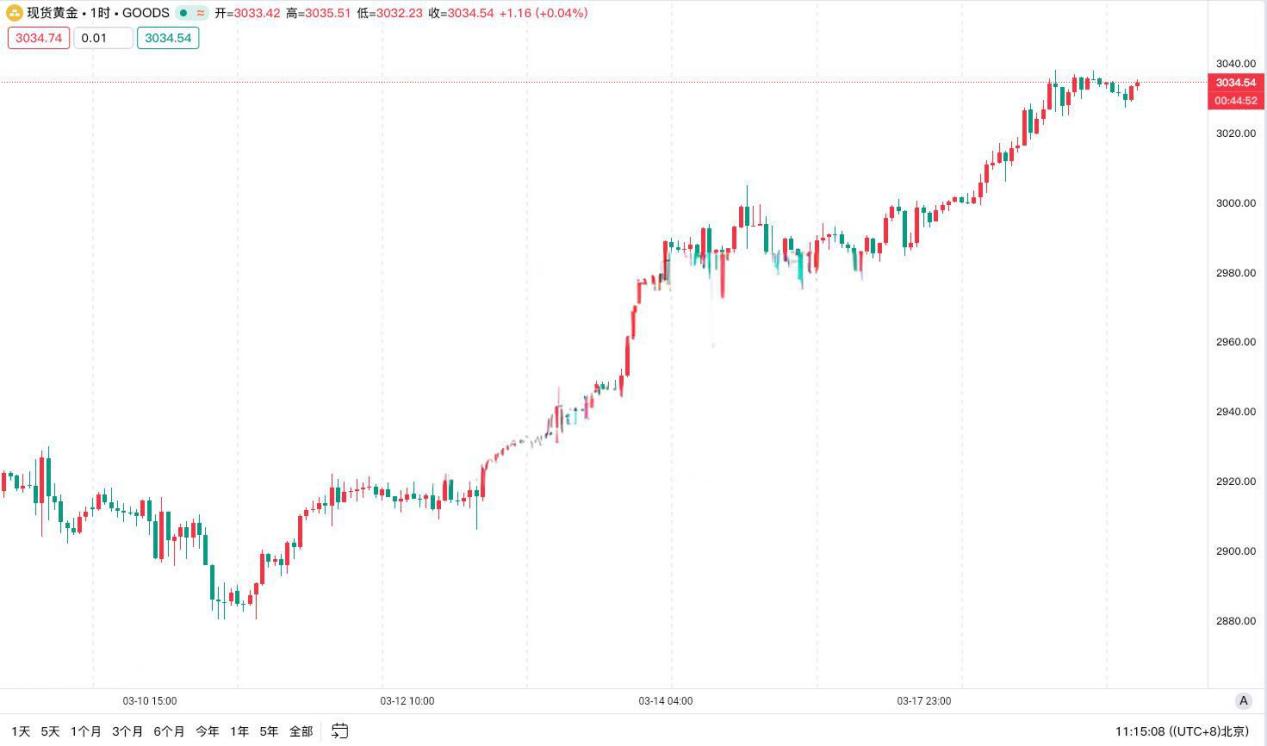
Affected by the ceasefire news, international gold prices fell under short-term pressure. On the evening of March 18th in the Asian market, spot gold closed at $3034.08 per ounce. However, the escalation of the Middle East situation (Israeli airstrikes on Gaza Strip) and the uncertainty of Trump’s tariff policies have led to a constant need for safe haven. As of the opening of Gold Day, spot gold was reported at $3033.96 per ounce, with the weekly line closing positive for the third consecutive week.
3、 Technical aspects and capital flow guidance for the future market
From a technical perspective, the daily gold level is still in an upward trend, with strong support from the $3000 integer level. The hourly chart shows that the gold price fluctuates within the range of $3015-3038. If it breaks below $3015, it may rebound to $2995 in the short term; If it breaks through $3040, it is expected to challenge the historical high of $3050. In terms of capital flow, the SPDR Gold Trust, the world’s largest gold ETF, has seen its holdings increase for three consecutive days, with a cumulative increase of over 15 tons, indicating that institutions are optimistic about gold in the medium to long term.
4、 Outlook for the future: ceasefire agreement becomes a short-term catalyst
Although the US Russia energy ceasefire agreement has eased some market anxiety, the political resolution of the Ukrainian issue still needs to overcome three major obstacles: territorial division, termination of military aid, and control of nuclear power plants. If the subsequent negotiations reach a deadlock, the gold price may rise again due to the rebound of safe haven sentiment; On the contrary, if a comprehensive ceasefire agreement is reached, the US dollar may strengthen temporarily, and gold prices will face technical downward pressure.
The current gold market is in a dual game of geopolitics and economic cycles. The energy ceasefire agreement on March 18th is only the starting point of the peace process, not the end point. Investors need to closely monitor the Federal Reserve interest rate meeting on March 19th and the evolving situation in the Middle East, adjust their position structure flexibly, and seize opportunities in the fluctuation of gold prices.




 English
  Chinese
  Vietnamese