
Trump angrily criticizes Zelensky, intensifying the conflict between Russia and Ukraine
- April 16, 2025
- Posted by: Macro Global Markets
- Category: News
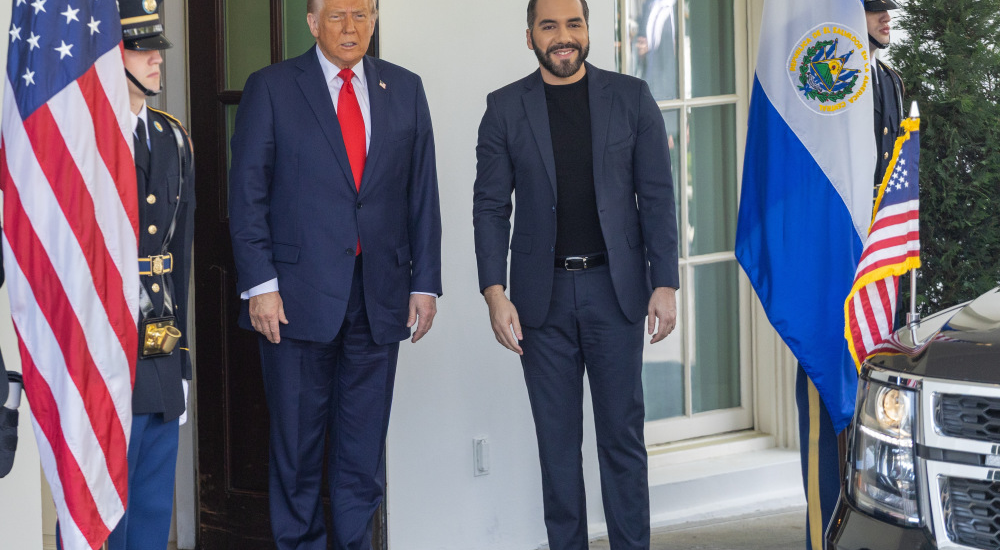
On April 14, 2025, US President Trump once again bombarded Ukrainian President Zelensky during his meeting with Salvadoran President Boukel at the White House, calling him “reckless in provoking war” and “ungrateful” for US aid.
1、 Trump’s’ triple attack ‘exacerbates conflict uncertainty
1. Directly accuse Zelensky of “provoking war”
Trump said bluntly in an exclusive interview with Bloomberg: “Zerensky declared war on a country 20 times stronger than Ukraine, but kept asking for ‘Patriot’ missiles, which is risking the lives of civilians.” He also blamed Putin, Biden and Zerensky for the deaths in the Russia-Ukraine conflict, stressing that “only I can prevent this massacre”. The day before, Zelensky announced plans to spend $15 billion to purchase 10 sets of Patriot systems and publicly called on Trump to visit Ukraine, but was strongly rejected by the latter.
2. Implying a reduction in military aid to shake the Western camp
When asked if he supports Ukraine’s purchase of more weapons, Trump sarcastically said, “American taxpayers should not pay unlimited bills for someone else’s war.” This is in stark contrast to the “$20 billion military aid” promised by the US State Department in March, sparking concerns in the market about a “shift in US aid policy. European Council President Michel urgently stated that the EU will fill the aid gap, but the market is skeptical about whether the EU’s coordination ability can offset the policy swings of the United States.
3. Risk of dual track intensification of tariffs and foreign policy
The US Department of Commerce revealed on the same day that it is evaluating the feasibility of imposing a 49% tariff on semiconductor equipment from companies such as TSMC and Samsung, which could lead to a 15% surge in global 28nm process costs. The combined effect of geopolitical conflicts and industrial policies has caused the VIX panic index to climb to 32.7, reaching a new high since the banking crisis in 2023.
2、 The outbreak of “dual hedging” demand in the gold market: geopolitical and policy resonance drives up gold prices
1. Geopolitical premium continues to rise
Spot gold was reported at $3227.21 per ounce in the Asian session, up 22% from before the conflict broke out (December 2024). According to data from the World Gold Council, the net inflow of global gold ETFs in the first two weeks of April was 56.9 tons, with the People’s Bank of China increasing its holdings for five consecutive months. In March, its reserves reached 2290 tons, accounting for 6.1% of its foreign exchange reserves. Trump’s foreign policy uncertainty is pushing gold towards its ultimate safe haven status as a ‘non credit asset,’ “said Wang Yang, Chief Analyst at CITIC Securities. 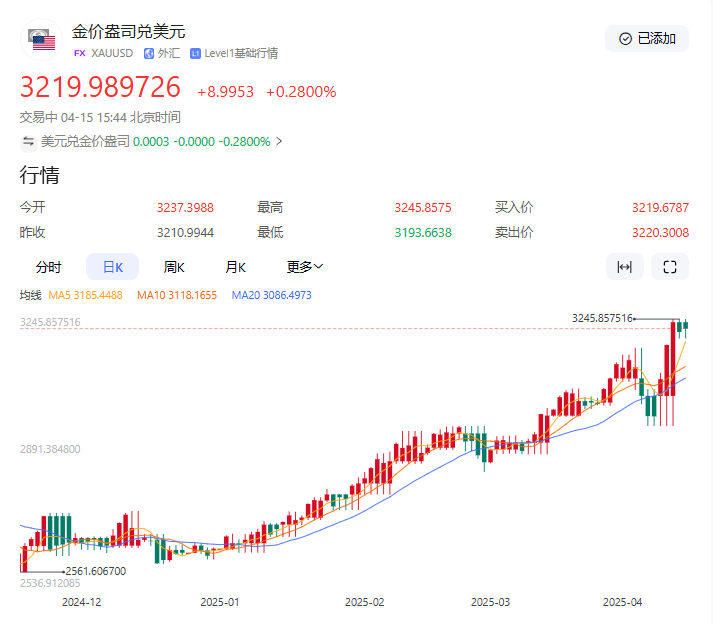
2. Institutional bullish expectations continue to strengthen
Goldman Sachs has raised its target for gold prices by the end of 2025 to $3700, citing “prolonged geopolitical conflicts and early interest rate cuts by the Federal Reserve”; Morgan Stanley’s quantitative model shows that when the VIX index is above 30 and the real interest rate is below 1.5%, the risk premium ratio of gold to the S&P 500 will increase to 2.5 times, driving funds to accelerate their migration from US stocks to gold. It is worth noting that the COMEX gold options market has seen a “large volume of $3300 call options trading”, reflecting the strong expectation of institutions to break through historical highs.
3、 Risk Warning: Increased volatility of gold under policy swings
1. Short term geopolitical events drive severe fluctuations
On April 15th, the European Union plans to launch the ninth round of sanctions against Russia. If it involves adjusting the energy price ceiling, it may trigger countermeasures from Russia, pushing the short-term volatility of gold to over 45%. In addition, the Trump administration may release the final list of semiconductor tariffs on April 18th, and if it exceeds market expectations, gold prices may experience a two pole fluctuation of “safe haven buying liquidity shock”.
2. Risk of Federal Reserve policy communication errors
If Federal Reserve Chairman Powell downplays expectations of a rate cut in his speech on April 24th, it could lead to gold prices giving up their intraday gains and testing the psychological barrier of $3200. On the contrary, if the dovish signal of “tariff shock far exceeding expectations” is released, the gold price may break through $3250, opening up new space of $3300-3350.

Trump’s accusation of Zerensky is in essence an extreme deduction of his “offshore balance” strategy, but it unexpectedly magnifies the risk of the Russia-Ukraine conflict getting out of control. When tariff policy and foreign policy jointly tear apart the global stability framework, the value of gold as a “systemic risk hedging tool” is redefined. Despite the intensification of short-term volatility, there is still room for the “safe haven premium” of gold prices to rise against the backdrop of the Federal Reserve being forced to “reverse operations” and global central banks continuing to purchase gold. Investors can focus on buying opportunities in the $3210-3195 range, with a stop loss set at $3185 and a target of $3265- in this era of policy and geopolitical turbulence, gold may be one of the few asset choices that can hedge against both “black swan” and “gray rhino” simultaneously.


 English
  Chinese
  Vietnamese