
Trump launches key mineral tariffs, investigates global supply chain shaking as gold hits new highs
- April 17, 2025
- Posted by: Macro Global Markets
- Category: News
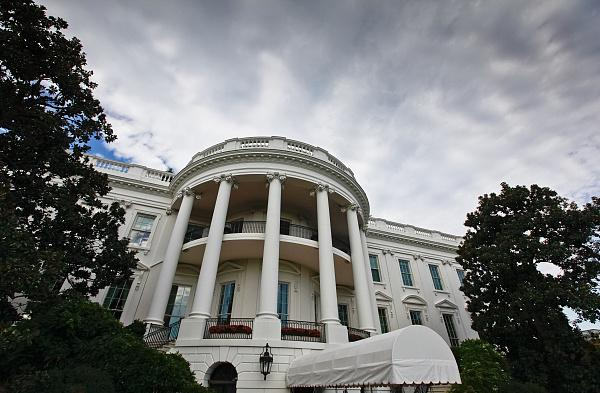
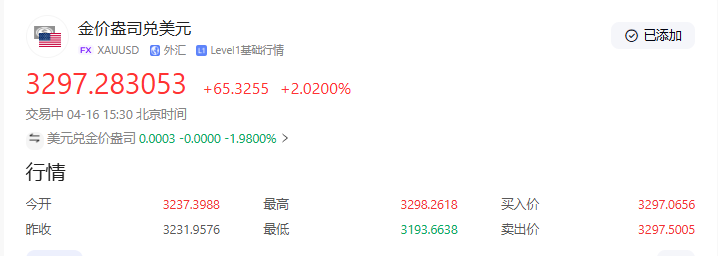
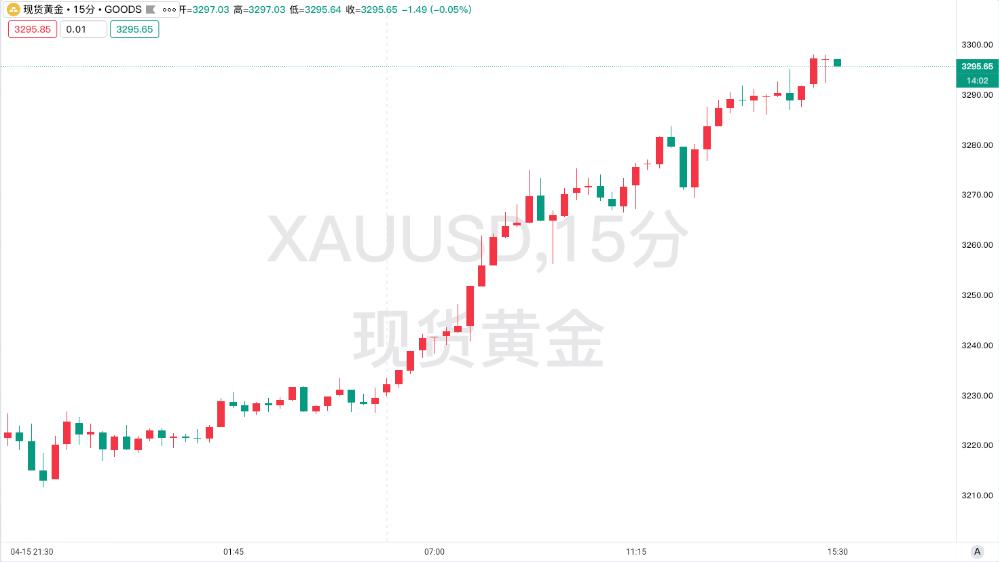
On April 15, 2025, US President Trump signed an executive order to officially launch a national security risk investigation into key minerals and their processed products that the United States relies on imports, in accordance with Section 232 of the Trade Expansion Act of 1962. This measure is seen as the latest move by the Trump administration to expand the trade war, targeting strategic resource supply chains such as rare earths and uranium, sparking strong concerns in the global market about “key mineral tariffs”. As a result, in the morning session of the Asian market on April 16th, spot gold broke through 3290 US dollars per ounce, reaching a high of 3298.26 US dollars per ounce, continuing to hit a historical high. Domestic gold jewelry prices also rose to 1007 yuan per gram, and the net inflow of gold ETFs exceeded 1.5 billion yuan per day, highlighting the market’s demand for hedging against policy uncertainty.
1、 Key mineral tariff investigation: Trump administration’s’ supply chain restructuring ‘escalates again
1. Analysis of the core content of administrative orders
Scope of investigation: Covering rare earth elements, uranium, and key mineral derived products after processing, involving key fields such as defense industry, new energy, and semiconductors. The White House statement emphasized that these materials are “key components of the defense industry foundation” used to manufacture strategic equipment such as missile guidance systems, jet engines, and advanced computers.
Legal basis and process: Using the same 232 clause as the 2018 steel and aluminum tariffs, the Department of Commerce is required to submit investigation results within 270 days. If it is determined that imports “harm national security,” the Trump administration can directly impose tariffs, which may replace the “equivalent tariffs” measures introduced earlier this month.
Target: Bloomberg pointed out that this move aims to weaken the United States’ critical mineral dependence on countries such as China and Russia, but may trigger the risk of global supply chain disruption. China currently controls 60% of the global rare earth processing capacity, while the United States relies on China for 80% of its rare earth imports.
2. Global industrial chain panic is heating up
The semiconductor and new energy industries are the first to bear the brunt: rare earths are the core materials for manufacturing chips and electric vehicle batteries. If tariffs are implemented, the global cost of 28nm chip manufacturing may soar by 15%, and supply chain costs for companies such as Tesla and CATL will be impacted.
EU and Emerging Market Countermeasures Expectations: The European Commission has initiated an emergency revision of the “Critical Raw Materials Act” and plans to impose retaliatory tariffs on US imports of lithium, cobalt, and other resources; India, Brazil and other countries are accelerating the construction of local mineral processing capacity, and the risk of “deglobalization” in the global supply chain has sharply increased.
2、 Gold market ‘safe haven frenzy’: Policy uncertainty drives demand for ‘non credit assets’
Spot gold breaks through 3290 US dollars, setting a new historical high
Price trend: In the morning session of the Asian market on April 16th, spot gold jumped short and opened high, quickly breaking through the $3270 mark. In the afternoon session, it reached a high of $3298.06 per ounce, with a daily increase of 1.8%; New York gold futures broke through $3300 per ounce, and the COMEX gold options market saw a 200% surge in call option trading volume at $3300.
Domestic market linkage: The price of Chow Tai Fook’s gold jewelry has exceeded 1007 yuan/gram, while Chow Tai Fook and Lao Miao’s gold have both exceeded 1000 yuan/gram, setting a new historical high; The early trading volume of the gold ETF (159937) reached 1.583 billion yuan, with a year-on-year increase of over 25%, and a net inflow of 4.78 billion yuan in the past 13 days.
The Trump administration’s tariff investigation on key minerals is essentially an extreme extension of its “economic nationalism,” but unexpectedly amplifies systemic risks in the global supply chain. Under the dual strangulation of tariff policies and geopolitics, the ultimate safe haven value of gold as a “non credit asset” has been rediscovered – it is both a “hard currency” to combat inflation and an “insurance policy” to hedge against policy black swan events. Despite the intensification of short-term fluctuations, the medium-term upward trend of gold prices has been repeatedly verified against the backdrop of the central bank’s continuous gold purchases and the increasing demand for institutional allocation.




 English
  Chinese
  Vietnamese