
Trump’s tariff stick hangs, Powell gets’ perfect excuse ‘to maintain high interest rates, gold under pressure
- July 9, 2025
- Posted by: Macro Global Markets
- Category: News
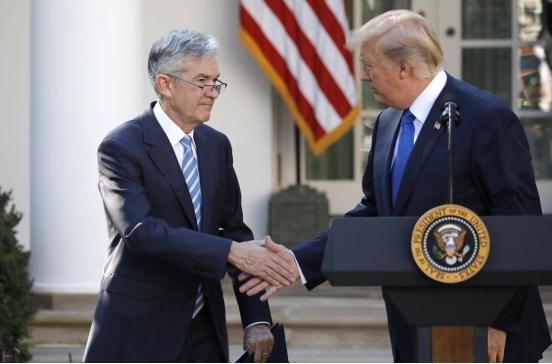
On July 7th, US President Trump signed an executive order to postpone the effective date of “equivalent tariffs” on 14 countries including Japan and South Korea from July 9th to August 1st, and announced specific tax rates (25% -40%). Although this policy adjustment provides a three week buffer period for each country, it explicitly requires the other party to reach a trade agreement before August 1st, otherwise they will face higher tariffs. Affected by this, the Nikkei 225 index of the Tokyo stock market fell by 1.2% on July 8th, and the stock prices of Toyota, Honda and other car companies fell by more than 4%.
1、 Powell’s’ perfect excuse ‘: tariff uncertainty becomes a roadblock to interest rate cuts
The attitude of the Federal Reserve towards Trump’s tariff policy has become a market focus. Powell has repeatedly stated that he needs to observe the actual impact of tariffs on inflation before deciding whether to cut interest rates. The latest market data shows that the yield of the US 10-year treasury bond bond rose to 4.2%, the highest point in more than two weeks. The US dollar index was at 97.514 in Asian trading on July 9, up 0.03% from the previous trading day. Wall Street analysts point out that Trump’s repeated tariff policies have made it difficult for businesses to formulate pricing strategies, resulting in delayed inflation data, which provides the “perfect excuse” for the Federal Reserve to maintain interest rates unchanged. UBS predicts that if tariffs eventually stabilize at around 15%, the US economy may experience mild stagflation, further weakening the need for interest rate cuts.
2、 Gold market under pressure, short-term bears dominate
Dragged by trade optimism and the strengthening of the US dollar, international spot gold fell below the key psychological barrier of $3300/ounce in the early Asian session on July 9th, hitting a low of $3284.64, with a intraday decline of 0.95%.

Technically speaking, after the daily gold level falls below the support of $3300, it may further explore the June low of $3248; The opening of the Bollinger Bands on the hourly chart has widened, the MACD death cross has diverged, and the RSI index has fallen below 40 and entered the oversold area but has not rebounded significantly, with short-term bearish momentum dominating. Global gold ETFs have been continuously reducing their net holdings in recent days, with institutional investors choosing to take profits amidst the easing trade situation, exacerbating market selling pressure.

3、 Market divergence intensifies: Institutions predict two extremes of ice and fire
The current market is significantly divided on the trend of gold. Citigroup released a report on July 2nd stating that as geopolitical risks in the Middle East cool down and global economic growth prospects improve, it is expected that gold prices will fall to $2500-2700 per ounce in the second half of 2026. However, institutions such as Goldman Sachs and JPMorgan Chase still maintain a bullish stance. Goldman Sachs predicts that gold prices will rise to $3700 by the end of 2025, while JPMorgan Chase even predicts that gold prices may exceed $6000 by 2029. This divergence reflects the market’s different interpretations of trade negotiations, Federal Reserve policies, and geopolitics.
4、 Key nodes in the future: The implementation of tariffs on August 1st and the game of Federal Reserve policies
The progress of negotiations before the tariffs take effect on August 1st will become an important catalyst for the trend of gold prices. If major trading partners such as the United States, Europe, Japan, and South Korea reach an agreement before the deadline, market risk appetite may further rebound, driving down gold prices; On the contrary, if negotiations break down or the geopolitical situation suddenly changes (such as a further decrease in navigation volume in the Strait of Hormuz), gold is expected to rebound quickly. In addition, the US PPI data released this week and the minutes of the Federal Reserve meeting will provide new guidance for the market. If inflation data exceeds expectations or the Federal Reserve releases dovish signals, it may ease the short-term pressure on gold.




 English
  Chinese
  Vietnamese