
US Middle East envoy says long-term peace agreement ‘optimistic outlook’, gold market under pressure to decline
- June 25, 2025
- Posted by: Macro Global Markets
- Category: News
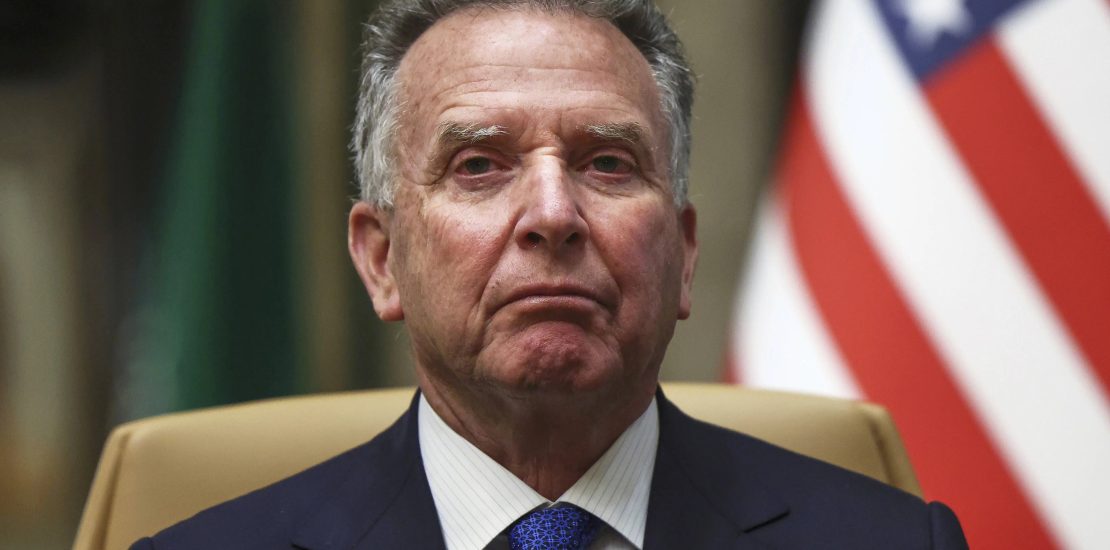
On June 24th, US Middle East envoy Witkov stated in an interview with Fox News that the US is engaging in direct and indirect contacts with Iran and that it is “time” to negotiate a comprehensive peace agreement, emphasizing his “confidence” in reaching an agreement. This statement echoes the ceasefire decision announced by Iranian President Pezehezhian on the same day – Pezehezhian stated that the 12 day conflict instigated by Israel has ended and Iran will focus on reconstruction work. On the same day, the Director General of the International Atomic Energy Agency, Grossi, confirmed that although some of Iran’s nuclear facilities were damaged, key research and power reactors were not attacked, providing a technical basis for subsequent negotiations.
1、 Negotiation background and progress
Since its resumption in April 2025, the US Iran negotiations have gone through four rounds of indirect talks, with the core issues focusing on Iran’s nuclear program restrictions and the lifting of US sanctions. This breakthrough came from the ceasefire agreement announced by Trump on June 23: Iran agreed to a first 12 hour ceasefire, followed by Israel, and the conflict officially ended 24 hours later. The ceasefire agreement was reached through mediation between Qatar and the United States. Iran sent a signal of easing after attacking a US military base in Qatar, stating that it would not launch further attacks, while the United States promised not to retaliate and to resume negotiations.
2、 Core contradictions and potential obstacles
Despite the envoy’s optimistic signals, negotiations still face multiple challenges:
Disagreement on nuclear issue: The United States demands that Iran limit uranium enrichment to below 3.67% and destroy some facilities, while Iran insists on the right to peaceful use of nuclear energy and only agrees to place some enriched uranium inventories and centrifuges under international supervision.
Non nuclear game: The United States attempts to include restrictions on Iran’s ballistic missile development and regional influence in negotiations, while Iran explicitly refuses to discuss anything beyond nuclear issues.
Israeli interference: Israeli Prime Minister Netanyahu has repeatedly pressured the United States to adopt the “Libyan model” to force Iran to abandon its nuclear program, and hinted that the possibility of a separate attack on Iran’s nuclear facilities cannot be ruled out.
US domestic politics: Special Envoy Witkov is on “vacation” due to security clearance review, which may delay the negotiation process; Anti Iran lobbying groups continue to exert pressure, demanding the maintenance of sanctions against Iran.
3、 Real time response in the gold market
The cooling of geopolitical risks directly impacts the demand for gold as a safe haven. On the morning of June 24th in the Asian market, spot gold plummeted more than $35 due to ceasefire news, hitting a low of $3333 per ounce. On June 25th, Asian market data showed that spot gold traded at $3331 per ounce, up 0.21% from the previous trading day, and fell below the 3300 level to around 3295. The optimistic expectation of the negotiation prospects in the market led to the withdrawal of safe haven funds, and the daily holdings of gold ETFs decreased by 12.3 tons, the largest decline in three months.
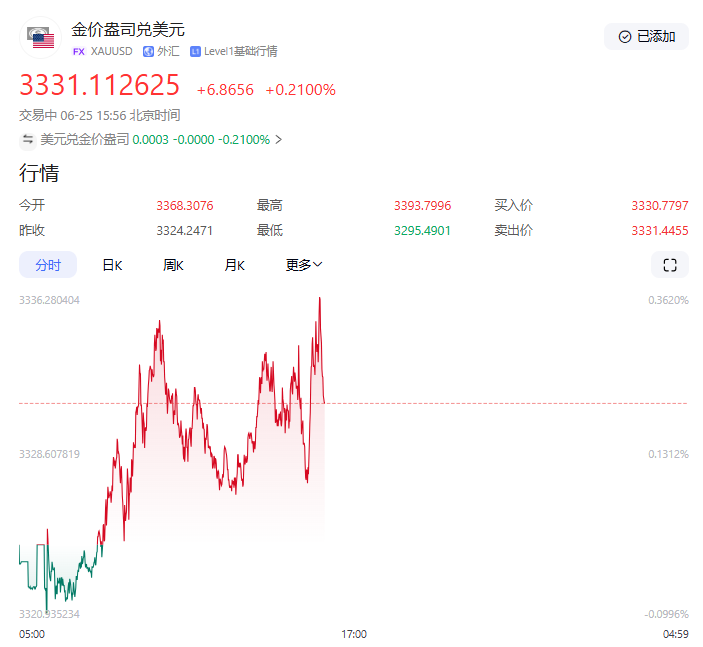
The optimism of the US Iran negotiations has injected stability into the situation in the Middle East, but the fragility and implementation risks of the agreement still exist. The gold market will be under pressure in the short term due to a safe haven retreat, but its medium to long term trend depends on the deep evolution of geopolitical games and the dual resonance of Federal Reserve policies. Investors need to pay attention to the details of negotiations while being alert to the volatile market expectations and dynamically adjust their risk exposure.
 English
  Chinese
  Vietnamese